


Dana leaned a sample board against the truck and checked the photograph she had just taken. It showed the roof cleanly. It did not show the questions she had answered before the job, the assessment process or the care her crew took around the property. Her website was full of photographs like it. She wondered what a homeowner was meant to understand from them.
The finished job left the decision unexplained.
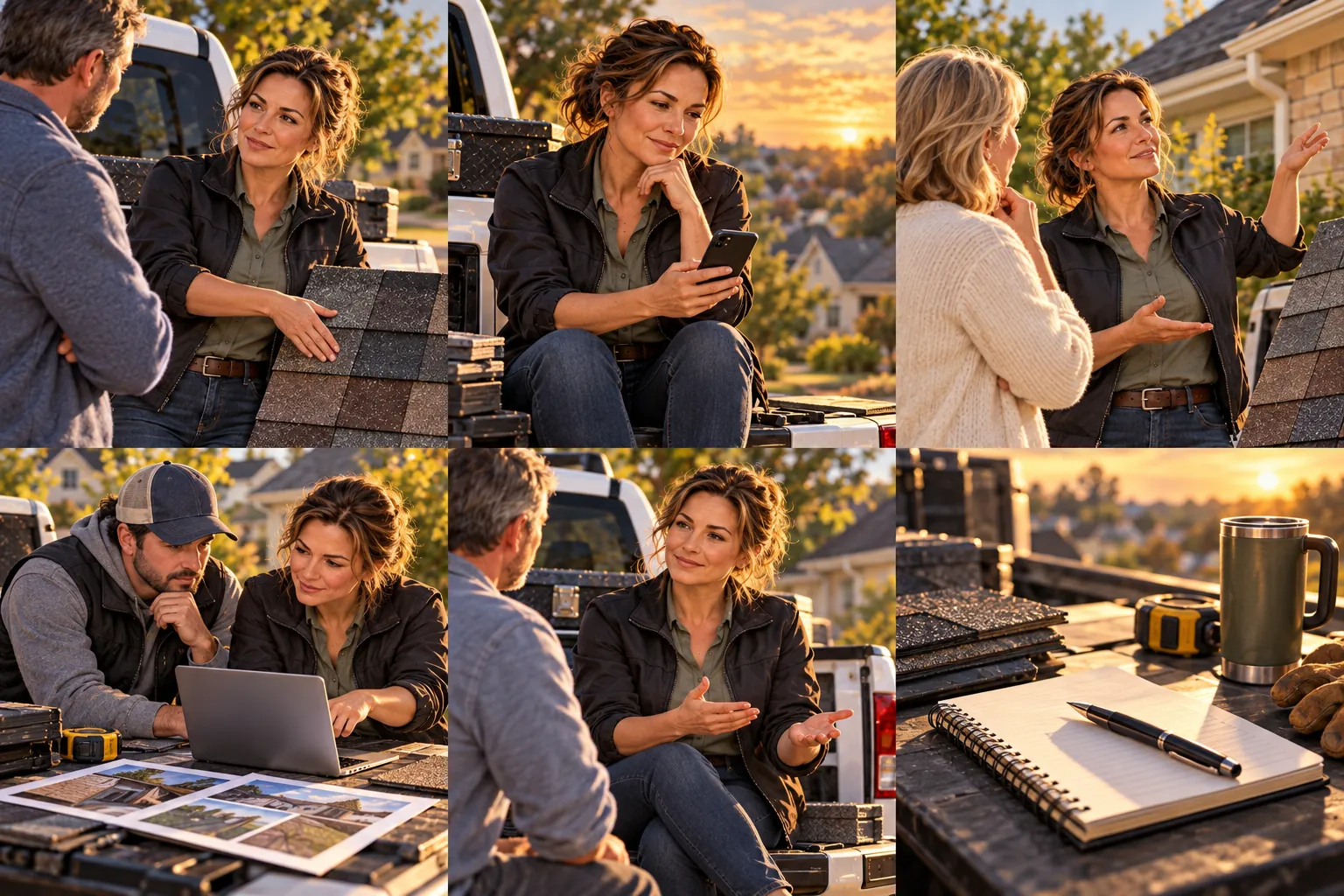
Her roofing company had grown through recommendations. Customers told neighbors how the team communicated and what the process was like. Online, the pages mainly listed services and displayed completed work.
Someone comparing local roofers wanted to know whether Dana handled their kind of project, where she worked and how an assessment or quote request began. A gallery could support that choice. It could not make it on its own.
Every supplier had a new way to get attention.
Dana tried a directory package and approved a series of storm-themed posts. The messages sounded urgent whether the business had capacity or not. Enquiries arrived with little context about the property or planned work.
She wanted the team’s reputation to carry through to the website. Instead, marketing kept asking her to sound like the loudest roofer on the street.
A homeowner wanted to understand the sequence.
Before a meeting, a homeowner asked what would happen after requesting an assessment. Dana explained the steps and the details the office would need. The question was entirely reasonable. The site’s button had said only “Get a quote.”
Dana realized the first useful improvement was an explanation, not a stronger claim about the crew.
The process joined the photographs.
Dana took the sample board, the job images and the homeowner’s question to DoPlaybook. They began with actual services, coverage and the assessment route. Project examples gained approved context about the work. A clear page explained what happens after an assessment request.
Articles developed the questions a homeowner should bring to the conversation. Social posts connected those explanations with the relevant services. An acknowledgement distinguished an enquiry from a confirmed visit or final price. Dana could review the promises against what her office and crew actually did.
The next enquiry had a place to start.
A later homeowner asked about the assessment process after reading the page. Dana could discuss the property instead of beginning with a slogan. The finished-work photographs now supported an explanation of how someone could begin their own project.
The marketing could not assess the roof or promise a contract. Dana still owned those judgments. In this story, her work had acquired a clearer public introduction, one worth reviewing before she packed the sample board into the truck.